Short studies in men
Kisspeptin and testosterone: what rose first
Cancer research led to hormone tests in men. A brain-led hormone rose first, testosterone followed, and repeat use weakened the reply.
What Kisspeptin changed in men’s blood tests
At first, cancer researchers studied kisspeptin because it was tied to slower cancer spread, and only later did human work link the protein to testosterone made in a man’s own testes. Those hormone steps start in your brain.
Kisspeptin doesn’t contain testosterone or make it alone. It tells brain cells to release the hormone that starts the chain.
A small gland below your brain then releases a hormone that reaches the testes. That hormone tells the testes to make testosterone.
In healthy men, kisspeptin-10 raised the first two hormones and then testosterone [3]. Medical staff watched the men during short tests.
Men with type 2 diabetes and mildly low testosterone also had a rise [9]. Their result hints that some low testosterone may begin in the brain.
I wouldn’t skip the limits. The rise can fade with repeat use [16], and kisspeptin isn’t approved testosterone care.
No amount here is advice for you. Each finding only says what happened during a study.
How Kisspeptin prompts your own testosterone
The male hormone chain begins in the brain. Kisspeptin wakes cells that release a starter hormone in short bursts.
That starter hormone reaches the small gland below the brain. The gland then sends out two hormones.
One travels through blood to the testes and tells them to make testosterone [1]. The other helps the body make sperm.
Kisspeptin only starts the first step. Your body makes the rest with its own glands and hormones.
This order explains why one blood-test number rises before testosterone. It also explains why kisspeptin isn’t testosterone.
The kisspeptin gene was tied to slower cancer spread first [13]. Researchers learned about its hormone work later.
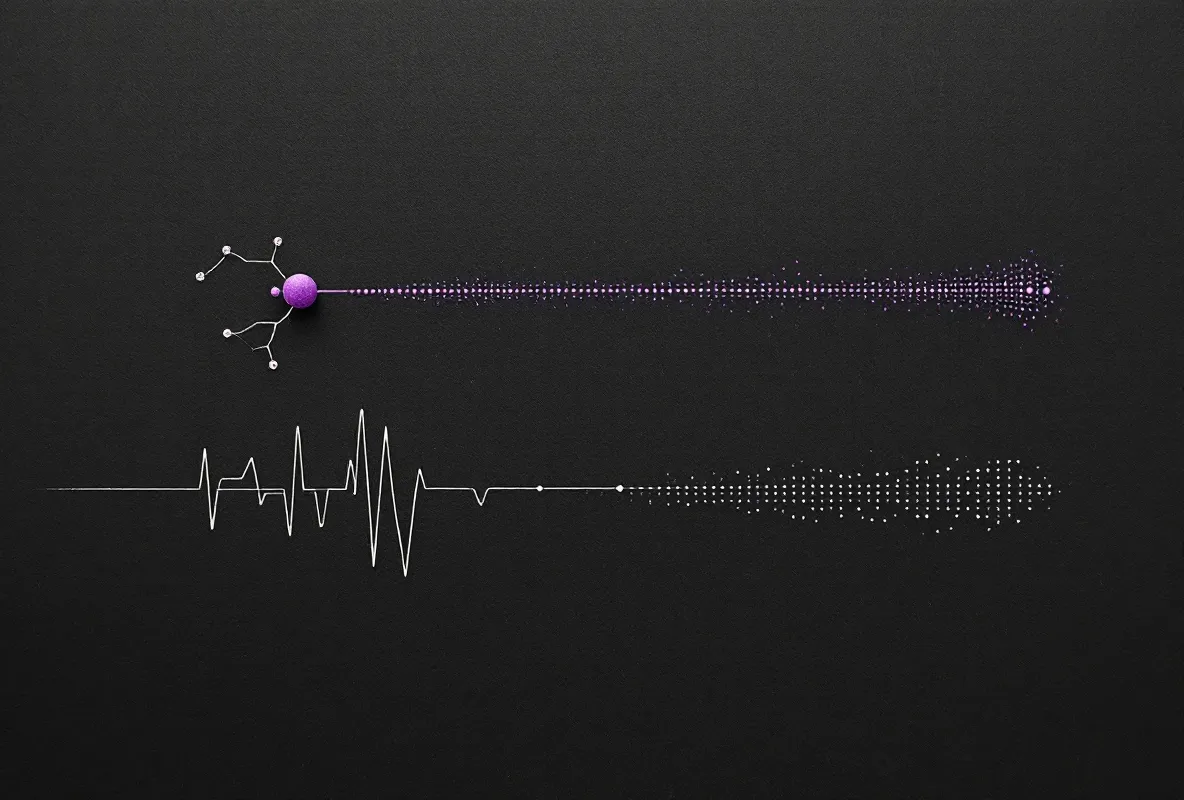
How much Kisspeptin changed testosterone in men
The studies in healthy men were small and brief. They show a blood-test rise during watched visits, not a lasting result for you.
A quick amount of kisspeptin-10 was strongest at 1 microgram for each kilogram of body weight. The hormone that prompts testosterone peaked 30 minutes after the dose [3].
A steady drip at a higher rate also raised testosterone. The study used 4 micrograms for each kilogram each hour.
An earlier test of kisspeptin-54 raised the first hormone most, with smaller rises in two later hormones [8]. That longer form stayed active for close to half an hour.
These findings don’t prove a lasting treatment effect. They show that your hormone chain may answer for a short time.
What Kisspeptin showed about low testosterone from the brain
The most clinically suggestive male finding comes from type 2 diabetes. In men with type 2 diabetes and mild biochemical hypogonadism, kisspeptin-10 stimulated serum testosterone and LH secretion — evidence that part of their low testosterone originates centrally, in reduced kisspeptin signaling at the hypothalamus, rather than solely in the testes [9]. That makes kisspeptin a research probe of where a man's hypogonadism begins, and a candidate mechanism worth studying — not an established therapy.
The questions men most often ask — whether kisspeptin could restore endogenous testosterone in those on testosterone-replacement therapy, or serve in recovery after anabolic-steroid use — are exactly that: open research questions. The controlled data establishes that kisspeptin can raise LH and testosterone acutely in healthy men [3]; it has not been tested as a restoration protocol in either of those populations, and nothing here should be read as one.
In the current catalog, Promise Peptides (mypromise.com) lists kisspeptin for prescription-only care, with each prescribing decision resting with a clinician licensed in the U.S. A request can end without a prescription; U.S. patients are the only people served, and the patient's state and proposed treatment narrow the options. FDA has not approved a compounded kisspeptin preparation; its compounding safety list still places kisspeptin-10 in Category 2 for significant safety risks, without Category 1's interim enforcement discretion.
What keeps the Kisspeptin rise from lasting
The hormone rise doesn’t stay strong with constant use. That is the clearest limit in kisspeptin and testosterone studies.
Women given kisspeptin-54 twice a day had a smaller reply over time. The rise fell from about 24 international units per liter on day 1 to about 2.5 international units per liter by the 14th day, a sharp loss of effect [16].
A strong, steady vein drip also lost force during the test [4]. Because that first hormone prompts testosterone, a weaker reply could mean less testosterone.
Wider gaps between uses seemed to hold the reply better. That finding isn’t a plan you can use for your care.
Kisspeptin still has no approved medical use [7]. The testosterone change remains a research finding.